3D Reconstruction of Lost Landmarks in Modern Tourism
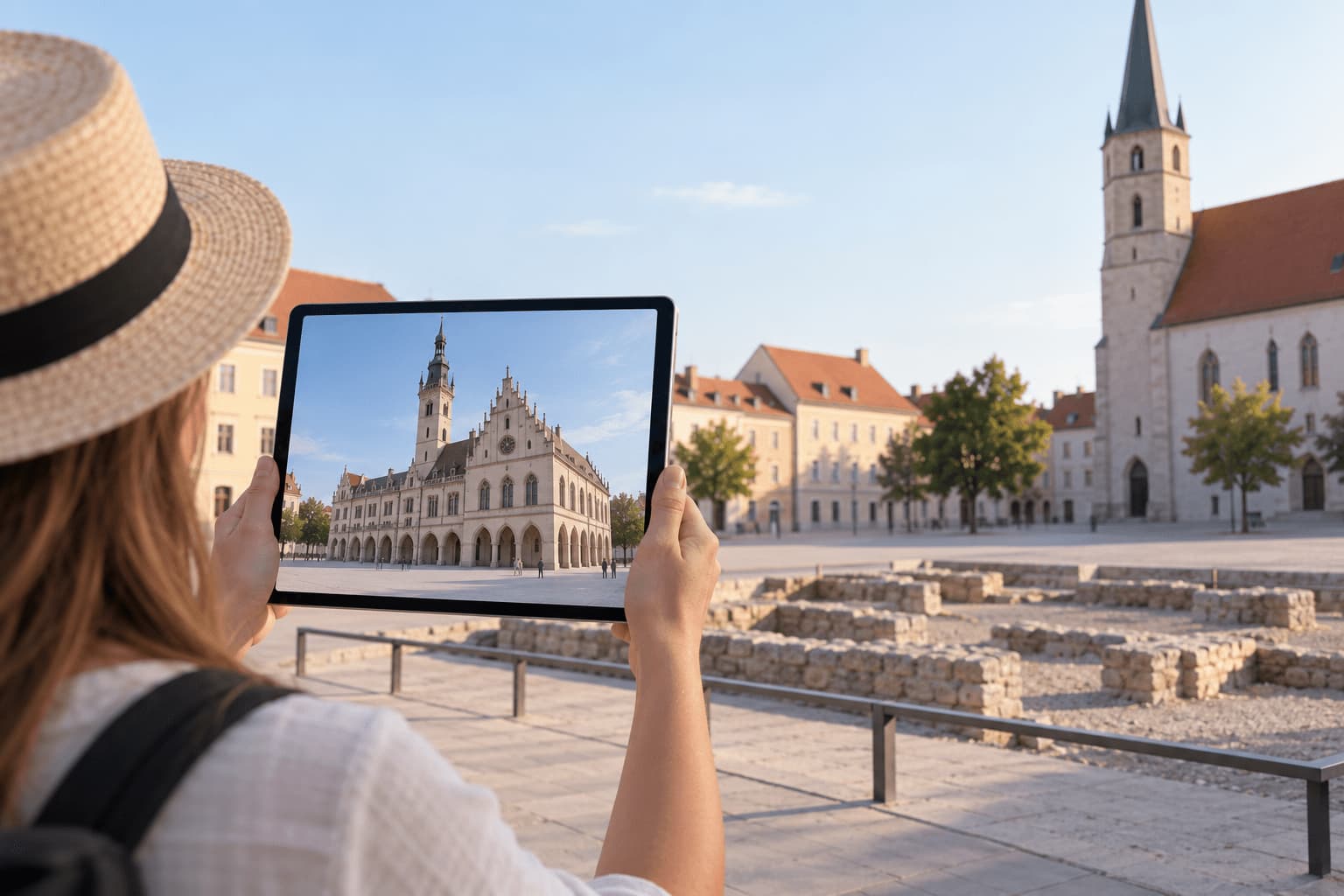
Historic buildings, monuments and urban spaces are constantly changing. Some are destroyed by war, fire or natural disasters, while others disappear through redevelopment, neglect or simple passage of time. For travellers, this creates a familiar problem: a guidebook may describe an important palace, gate, church or district that no longer exists in its original form. Modern 3D reconstruction is beginning to change that experience. Instead of relying only on old photographs, drawings and written descriptions, visitors can increasingly see digital versions of lost landmarks and compare them directly with the places that remain today.
A 3D reconstruction is more than a decorative model. At its best, it combines archaeological evidence, architectural plans, archival photographs, maps, written records and surviving fragments into a digital representation of a place. Researchers can use these materials to rebuild the proportions of a structure, reproduce missing façades and estimate how streets or interiors may once have looked. The result can then be presented on a screen, inside a museum, through a mobile application or as part of an augmented reality experience at the actual site.
For tourism, the most interesting use begins when the reconstruction is connected to location. A visitor standing in front of an empty square can point a phone or tablet toward the site and see a digital building positioned over the modern landscape. In other cases, special headsets or viewing stations allow users to move around a reconstructed environment and observe details from different angles. This makes lost architecture easier to understand because the visitor no longer has to imagine scale and position from a flat drawing.
The difference can be especially striking at archaeological sites. Ruins are often difficult for non-specialists to interpret. A line of stones may once have formed the wall of a large house, while a series of foundations may represent several phases of construction spread across centuries. A 3D model can show the relationship between these fragments and the original structure without physically rebuilding it. This is important because traditional reconstruction can sometimes damage archaeological evidence or create a misleading impression of certainty.
Digital models can also show change over time. Instead of presenting one ideal version of a monument, a tourism application can allow users to switch between different periods. A medieval city gate may appear in its original defensive form, then in a later ceremonial version and finally as it looked shortly before demolition. This turns a single location into a timeline and helps visitors understand that historic places were rarely static.
The quality of such reconstructions depends heavily on the evidence behind them. Some monuments are extremely well documented. Architects may have left detailed plans, early photographers may have recorded every façade and museums may hold original decorative elements. In other cases, only a few sketches or written descriptions survive. A convincing digital image can therefore create a problem: visitors may assume that every visible detail is historically certain even when parts of the model are speculative.
Good reconstruction projects try to make this distinction clear. Confirmed elements can be based directly on surviving evidence, while uncertain sections may be presented in a different colour, level of detail or visual style. Another approach is to offer several possible reconstructions when researchers disagree. For tourism, this can actually make the experience more interesting. Instead of pretending that the past is completely known, the digital model can show how historians work with incomplete evidence.
Photogrammetry and laser scanning have improved the accuracy of 3D heritage work. Photogrammetry creates models from large numbers of overlapping photographs, while laser scanners can record the shape of buildings and objects with very high precision. These methods are particularly useful when part of a monument survives. Researchers can scan the existing structure and then use historical evidence to recreate missing sections around it. The same digital record can later support conservation work as well as tourism.
Artificial intelligence is also entering this field, but its role needs to be handled carefully. AI tools can speed up image processing, recognise patterns in archives or assist with creating textures and missing visual elements. They can also produce highly convincing images with very little historical evidence. That is useful for illustration but risky for heritage interpretation. A reconstruction intended for visitors should not blur the line between documented history and visual invention simply because the technology can produce a realistic result.
For travellers, one of the strongest advantages of 3D reconstruction is accessibility. A lost building may have left almost no visible trace, and a fragile archaeological area may be closed to direct access. Digital versions can make these places understandable without requiring physical entry. They can also recreate interiors that no longer exist or show upper levels that visitors could never reach safely.
Museums are increasingly using the same idea to connect objects with their original context. A carved stone fragment in a display case can be difficult to understand on its own. A 3D visualisation can show exactly where it belonged on a façade and what the complete building looked like around it. This changes the object from an isolated museum piece into part of a larger historical environment.
There is also potential for less famous destinations. Digital heritage is often associated with major monuments, but smaller towns may benefit even more. A demolished market hall, vanished city wall or former industrial complex can become part of a local walking route without the cost of reconstructing it physically. Tourists can discover layers of urban history that would otherwise remain invisible. This creates opportunities for destinations that have strong historical stories but relatively few surviving monuments.
At the same time, technology should support rather than dominate the visit. If travellers spend the entire experience looking at a screen, the digital reconstruction can separate them from the real location instead of helping them understand it. The most effective systems tend to use digital content selectively. A short reconstruction at the right point can explain a vanished structure, after which the visitor can look again at the actual landscape with a better understanding of what once stood there.
3D reconstruction is therefore changing the role of the historical tourist site. A place no longer needs to preserve a complete building in order to communicate its past. Empty spaces, ruins and surviving fragments can become much more legible when digital layers are added carefully and transparently.
The technology does not bring lost monuments back in a physical sense, and it should not pretend to. Its real value is different. It gives travellers a way to connect evidence, space and imagination. When reconstruction is based on serious research and uncertainty is clearly acknowledged, 3D models can turn an apparently empty location into one of the most informative stops on a historical journey.